
MONTYNE
THE SCULPTOR-PAINTER
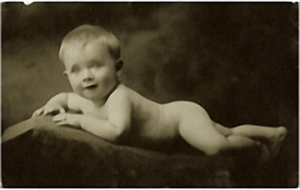
Montyne was born in Salt Lake City, Utah, USA. On November 23rd, 1916, the day Sherman LaMont Sudbury entered the world, it marked the beginning of an inimitable and adventurous life that filled the pages of history with wonder and amazement. This polymath flashed across the world of art like a brilliant comet, and his wonderful work privately continues to blaze a spectacular trail of accomplishments that are truly all his own.
His exceptional talent was
recognized early on in his life.

Montyne's creative abilities were evident from the beginning, standing out distinctly when he was just nine years old. While his peers reveled in the unburdened joys of youth, this young artist embarked on a different path, engaging in private tutoring. His dedication to learning soon extended beyond conventional education; by his early teens, he was already delving into the study of anatomy alongside medical students, contemplating becoming a doctor. However, it wasn't just his intellectual curiosity that defined his young years. Death had twice knocked at his door, once with acute appendicitis and the other being struck down by an automobile. Faced with physical frailty, Montyne, at twelve, ignited a fervent ambition to transform his physique, adopting the discipline of physical culture with an intensity that would remain with him his entire life.
Choosing the path of strength and physical enhancement, he turned to a Charles Atlas weight-lifting course, a decision that not only altered his physical form but also earned him a medal from Charles Atlas himself for "Physical Perfection." This accolade was just the beginning of a lifelong commitment to fitness. His quest for physical improvement led him to explore various disciplines, including weightlifting, yoga, martial arts, dance, and gymnastics, achieving numerous records in these areas early on.
His journey from a prodigious child with a fragile constitution to a paragon of physical strength and artistic talent illustrates a remarkable fusion of mind and body. His achievements in physical culture complemented his artistic pursuits, each discipline enriching the other and together painting the portrait of an individual whose life was a perpetual quest for excellence in every sphere.
Choosing the path of strength and physical enhancement, he turned to a Charles Atlas weight-lifting course, a decision that not only altered his physical form but also earned him a medal from Charles Atlas himself for "Physical Perfection." This accolade was just the beginning of a lifelong commitment to fitness. His quest for physical improvement led him to explore various disciplines, including weightlifting, yoga, martial arts, dance, and gymnastics, achieving numerous records in these areas early on.
His journey from a prodigious child with a fragile constitution to a paragon of physical strength and artistic talent illustrates a remarkable fusion of mind and body. His achievements in physical culture complemented his artistic pursuits, each discipline enriching the other and together painting the portrait of an individual whose life was a perpetual quest for excellence in every sphere.
His willpower was unstoppable.

Montyne's determination and resilience were nothing short of extraordinary. His exceptional willpower not only propelled him through various challenges but also led him to excel in the competitive world of athletics. There, he set numerous weight-lifting records and clinched multiple trophies across various disciplines, including fencing, wrestling, and gymnastics. Doing the five lifts, which were standard at that time: the squat, bench press, deadlift, one-arm press, and military press. Weighing in at 143 pounds, he came within five pounds of beating the heavyweights. Notably, Montyne achieved the remarkable feat of "pressing" twice his body weight overhead—a testament to his physical prowess and a rare accomplishment that placed him among the elite athletes of his time.
Despite his extensive involvement in athletics, Montyne's commitment to academic and artistic excellence never waned. He pursued his education with the same fervor, graduating with top honors from the A.B. Wrights Academy of Fine Arts and attending the University of Utah. His quest for knowledge and skill further took him across borders to Mexico City, where he learned the language and immersed himself in the art of bullfighting, and then on to Spain and Italy, enriching his artistic perspective and technique.
This period of intense study and rigorous physical training forged Montyne's unique artistic vision. The diverse experiences and disciplines he engaged in not only shaped his physical capabilities but also deeply influenced his approach to art, laying a robust foundation for his later achievements. Montyne's life story exemplifies how the integration of physical strength, intellectual curiosity, and artistic talent can create a profound and multifaceted genius.
Despite his extensive involvement in athletics, Montyne's commitment to academic and artistic excellence never waned. He pursued his education with the same fervor, graduating with top honors from the A.B. Wrights Academy of Fine Arts and attending the University of Utah. His quest for knowledge and skill further took him across borders to Mexico City, where he learned the language and immersed himself in the art of bullfighting, and then on to Spain and Italy, enriching his artistic perspective and technique.
This period of intense study and rigorous physical training forged Montyne's unique artistic vision. The diverse experiences and disciplines he engaged in not only shaped his physical capabilities but also deeply influenced his approach to art, laying a robust foundation for his later achievements. Montyne's life story exemplifies how the integration of physical strength, intellectual curiosity, and artistic talent can create a profound and multifaceted genius.
In 1940, his aspiration to enter the Olympics
for fencing and weightlifting was canceled.

In 1940, Montyne was poised to showcase his skills in fencing and weightlifting as a hopeful at the Olympics, a dream that symbolized the pinnacle of his athletic endeavors. However, the outbreak of World War II diverted the world's focus to a more pressing crisis, leading to the cancellation of the Tokyo Games. This unforeseen turn of events, while disheartening, prompted Montyne to pivot his remarkable energy and creativity towards artistic pursuits.
During this tumultuous period, Montyne embarked on various projects, notably his impactful “Lose-a-minute, Save-a-life” campaign. This series of black-and-white illustrations emphasized the importance of driving safety, marking one of the nation's first major efforts to educate the public about the perils of drunk driving. Beyond this, he lent his talents to book illustrations, cartoons, and advertising, showcasing his versatility and ingenuity. His pen-and-ink work is wonderful.
His artistic repertoire expanded to include a series of “cheesecake” or “pin-up” art for calendars aimed at bolstering the war effort through fundraising. Montyne's pin-ups, characterized by their charming “girl next door” appeal and wholesome yet undeniable allure, became wildly popular among servicemen. “The Girl in Green was a favorite,” highlighting a different facet of his artistic ability.
Despite his contributions to the war effort through art, Montyne himself was unable to serve in the military due to a severe back injury that he previously sustained on Muscle Beach in southern California while the topman during some hand-to-hand rehearsals, which incapacitated him for months. The military doctor's decision, symbolized by a large red X painted on his chest, inadvertently saved Montyne's life. As he grappled with the disappointment of being sidelined, fate intervened as a grim reminder of the war's horrors: the ship designated to transport him and his friends into battle was tragically sunk by a German U-boat with no survivors. The loss of his friends whom he tried to enlist with stayed with him his entire life. It poses many questions as to whether our lives are preordained or if it is just blind luck that creates the outcome. No matter the truth, Montyne felt blessed, and that feeling created an unwavering drive full of appreciation for life. His body glowed with this mindset when he walked into a room, creating an aura of curiosity, respect, and admiration. This episode in Montyne's life illustrates a complex interplay of fate, resilience, and the redirection of creative energies. While World War II thwarted his Olympic aspirations and a bad back his patriotic military service, it also catalyzed a profound expansion of his artistic legacy, contributing significantly to the war effort and enriching the cultural landscape of the time. Out of necessity, he devised and created therapies that cured his troubling back. The device he invented was way before its time, something he used for the rest of his life and, in the future, would share with people who suffered from chronic back problems.
During this tumultuous period, Montyne embarked on various projects, notably his impactful “Lose-a-minute, Save-a-life” campaign. This series of black-and-white illustrations emphasized the importance of driving safety, marking one of the nation's first major efforts to educate the public about the perils of drunk driving. Beyond this, he lent his talents to book illustrations, cartoons, and advertising, showcasing his versatility and ingenuity. His pen-and-ink work is wonderful.
His artistic repertoire expanded to include a series of “cheesecake” or “pin-up” art for calendars aimed at bolstering the war effort through fundraising. Montyne's pin-ups, characterized by their charming “girl next door” appeal and wholesome yet undeniable allure, became wildly popular among servicemen. “The Girl in Green was a favorite,” highlighting a different facet of his artistic ability.
Despite his contributions to the war effort through art, Montyne himself was unable to serve in the military due to a severe back injury that he previously sustained on Muscle Beach in southern California while the topman during some hand-to-hand rehearsals, which incapacitated him for months. The military doctor's decision, symbolized by a large red X painted on his chest, inadvertently saved Montyne's life. As he grappled with the disappointment of being sidelined, fate intervened as a grim reminder of the war's horrors: the ship designated to transport him and his friends into battle was tragically sunk by a German U-boat with no survivors. The loss of his friends whom he tried to enlist with stayed with him his entire life. It poses many questions as to whether our lives are preordained or if it is just blind luck that creates the outcome. No matter the truth, Montyne felt blessed, and that feeling created an unwavering drive full of appreciation for life. His body glowed with this mindset when he walked into a room, creating an aura of curiosity, respect, and admiration. This episode in Montyne's life illustrates a complex interplay of fate, resilience, and the redirection of creative energies. While World War II thwarted his Olympic aspirations and a bad back his patriotic military service, it also catalyzed a profound expansion of his artistic legacy, contributing significantly to the war effort and enriching the cultural landscape of the time. Out of necessity, he devised and created therapies that cured his troubling back. The device he invented was way before its time, something he used for the rest of his life and, in the future, would share with people who suffered from chronic back problems.
This situation led him in a direction that
would forever affect his art and life.

The redirection in Montyne's life due to the war set the stage for an unexpected yet remarkable twist in his career. Shifting from his foiled Olympic dreams, he channeled his physical talents back into a thrilling form of expression: theatrical entertainment. Montyne's agility and strength were focused back into a dangerous hand-balancing act he had mastered years ago, showcasing his athletic abilities and flair to dramatically captivate an audience completely.
This venture catapulted him into the limelight as a world-renowned performer advertised as the "World’s Foremost Hazard Balancer." His act wasn’t just a display of physical skill but an artistic performance that earned him a place on stages and in nightclubs globally—places like The El Rancho, Thunderbird, and all the hotels in Las Vegas, and Bimbos 365 Club in San Francisco, to mention a few. Montyne’s fame in this arena grew, and he graced over thirty television programs, further solidifying his reputation as an entertainer.
During his tours, Montyne often performed for troops, linking back to his earlier contributions to the war effort. His shows, which included appearances with notable figures like Bob Hope, brought much-needed entertainment and relief to servicemen during challenging times. He performed on You Asked for It with Arnold Schwarzenegger, who made a stand saying Montyne was the strongest man pound for pound he ever met. Young Schwarzenegger was introduced to the bottle-lift by Montyne. This encompassed real strength, to which many who failed suggested it was a trick. Taking an empty wine bottle and laying it on its side, the contestant would then proceed to pick it up with their thumbs, holding the bottle by the very end of the neck on the closure perfectly horizontal while not touching the clasped index fingers. Schwarzenegger fumbled with the bottle in disappointment as Montyne respectfully did the lift with ease.
Beyond his performances, Montyne’s interactions with stars, politicians, and public personalities during his tours enriched his social and professional network. These encounters often inspired his artistic side, leading to the creation of personalized artworks for these high-profile figures. Agostino Giuntoli, the owner and creator of the famous nightclub Bimbo’s 365, booked Montyne many times to do his act. Montyne, created the famous attraction at Bimbo’s 365 Club of The Girl in the Fishbowl. Montyne’s idea and ability to create this optical illusion would help him later when creating the View-Master shots. This attraction has become world famous and survives till this day. Subsequently, Dolfina, the first mermaid in the bowl, was Montyne’s sister. Moreover, his travels provided abundant opportunities to produce canvas works across various locales, adding to his portfolio and reputation as a true artist. His fusion of art and entertainment was at its zenith when Montyne created a detailed puppet called “Poncho.” He would perform his act while manipulating small wires to bring Poncho to life. The artist became a ventriloquist! This added humor to the act. While performing his dangerous feats, Poncho harassed him in several languages. This was so popular that Montyne created other puppets and used them to rest while entertaining the audience, who were in awe.
This venture catapulted him into the limelight as a world-renowned performer advertised as the "World’s Foremost Hazard Balancer." His act wasn’t just a display of physical skill but an artistic performance that earned him a place on stages and in nightclubs globally—places like The El Rancho, Thunderbird, and all the hotels in Las Vegas, and Bimbos 365 Club in San Francisco, to mention a few. Montyne’s fame in this arena grew, and he graced over thirty television programs, further solidifying his reputation as an entertainer.
During his tours, Montyne often performed for troops, linking back to his earlier contributions to the war effort. His shows, which included appearances with notable figures like Bob Hope, brought much-needed entertainment and relief to servicemen during challenging times. He performed on You Asked for It with Arnold Schwarzenegger, who made a stand saying Montyne was the strongest man pound for pound he ever met. Young Schwarzenegger was introduced to the bottle-lift by Montyne. This encompassed real strength, to which many who failed suggested it was a trick. Taking an empty wine bottle and laying it on its side, the contestant would then proceed to pick it up with their thumbs, holding the bottle by the very end of the neck on the closure perfectly horizontal while not touching the clasped index fingers. Schwarzenegger fumbled with the bottle in disappointment as Montyne respectfully did the lift with ease.
Beyond his performances, Montyne’s interactions with stars, politicians, and public personalities during his tours enriched his social and professional network. These encounters often inspired his artistic side, leading to the creation of personalized artworks for these high-profile figures. Agostino Giuntoli, the owner and creator of the famous nightclub Bimbo’s 365, booked Montyne many times to do his act. Montyne, created the famous attraction at Bimbo’s 365 Club of The Girl in the Fishbowl. Montyne’s idea and ability to create this optical illusion would help him later when creating the View-Master shots. This attraction has become world famous and survives till this day. Subsequently, Dolfina, the first mermaid in the bowl, was Montyne’s sister. Moreover, his travels provided abundant opportunities to produce canvas works across various locales, adding to his portfolio and reputation as a true artist. His fusion of art and entertainment was at its zenith when Montyne created a detailed puppet called “Poncho.” He would perform his act while manipulating small wires to bring Poncho to life. The artist became a ventriloquist! This added humor to the act. While performing his dangerous feats, Poncho harassed him in several languages. This was so popular that Montyne created other puppets and used them to rest while entertaining the audience, who were in awe.
Montyne's journey through life illustrates a
seamless fusion of art, athleticism, and personal transformations.

Montyne's journey through life illustrates a seamless fusion of art, athleticism, and personal transformations. His ability to adapt and thrive, moving from sports to art and entertainment, reflects his dynamic creativity and resilience, leaving a lasting impact on both the art world and the realms of the performing arts. His dual career as a performer and artist enhanced his visibility across diverse audiences and enriched his artistic palette with many global influences. This exposure to world cultures deepened his understanding of human expression and movement, elements that became central to what is celebrated as The Montyne Experience.
His performances allowed him direct observation of the human body in dynamic states—either under the stress of a physical feat or the graceful poise of a dance move. This ongoing study complemented his earlier academic pursuits in anatomy, offering a practical perspective that fueled his artistic interpretations. The synthesis of this knowledge is evident in his art, where the precision of muscle and motion and the intensity of expressions are captured with striking clarity.
Moreover, Montyne's extensive travels and performances in various cultural settings provided him with a rich tapestry of experiences and visuals to incorporate into his work. Each canvas he created bore the imprint of a diverse world, reflecting vibrant cultures, dramatic gestures, and the universal themes of struggle and triumph. His ability to blend these elements seamlessly into his art did more than showcase his skill; it invited viewers into a vividly rendered world shaped by a unique artistic and athletic journey. Through his work, Montyne not only portrayed the human form but also celebrated the human spirit in all its complexity and resilience.
Montyne was destined to help redefine the intersection of sculpture and painting, emerging as a pioneering creative force in the art world. From his early days, he was deeply engaged with both painting and sculpture, disciplines he would eventually merge into an innovative art form he termed "Dimensional Painting." Known as the "Sculptor-Painter," Montyne's work challenged conventional artistic boundaries by introducing a literal and metaphorical depth to paintings that had previously been unexplored.
His technique involved crafting a third dimension within the traditionally flat canvas, allowing him to achieve a dynamic interplay of shadow and light that mimicked the depth and volume of a sculpture. This method enhanced the visual impact of his art by also enriching the viewer's experience by adding a layer of complexity that transformed the perception of the painted surface.
His performances allowed him direct observation of the human body in dynamic states—either under the stress of a physical feat or the graceful poise of a dance move. This ongoing study complemented his earlier academic pursuits in anatomy, offering a practical perspective that fueled his artistic interpretations. The synthesis of this knowledge is evident in his art, where the precision of muscle and motion and the intensity of expressions are captured with striking clarity.
Moreover, Montyne's extensive travels and performances in various cultural settings provided him with a rich tapestry of experiences and visuals to incorporate into his work. Each canvas he created bore the imprint of a diverse world, reflecting vibrant cultures, dramatic gestures, and the universal themes of struggle and triumph. His ability to blend these elements seamlessly into his art did more than showcase his skill; it invited viewers into a vividly rendered world shaped by a unique artistic and athletic journey. Through his work, Montyne not only portrayed the human form but also celebrated the human spirit in all its complexity and resilience.
Montyne was destined to help redefine the intersection of sculpture and painting, emerging as a pioneering creative force in the art world. From his early days, he was deeply engaged with both painting and sculpture, disciplines he would eventually merge into an innovative art form he termed "Dimensional Painting." Known as the "Sculptor-Painter," Montyne's work challenged conventional artistic boundaries by introducing a literal and metaphorical depth to paintings that had previously been unexplored.
His technique involved crafting a third dimension within the traditionally flat canvas, allowing him to achieve a dynamic interplay of shadow and light that mimicked the depth and volume of a sculpture. This method enhanced the visual impact of his art by also enriching the viewer's experience by adding a layer of complexity that transformed the perception of the painted surface.
Montyne was destined to help redefine the intersection of sculpture and painting.
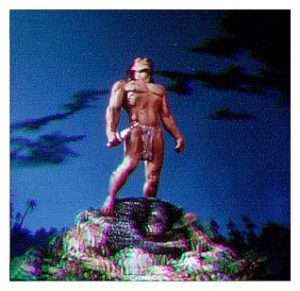
Among his most notable works in this style was his depiction of "Tarzan of the Apes" for View-Master, which exemplified his ability to capture dramatic narratives in vivid detail. Other works like “Cyrano,” “Samson,” and “The Bullfighter in Blue” further showcased his unique ability to bring literary and historical characters to life with an intensity and presence that echoed the grandeur of classical sculptures.
This distinctive approach, which Montyne branded as The Montyne Experience, helped change how figures and scenes were portrayed in modern art. His creations are celebrated for their artistic innovation and the way they encapsulate the essence of their subjects with unprecedented vibrancy and spirit. Through his work, Montyne left an indelible mark on the art world, redefining the possibilities of how form, space, and narrative can be explored through the canvas.
In the late 1940s and throughout the 1950s, Montyne entered a prolific phase of his career, a period marked by a rare freedom from everyday constraints that allowed his artistic spirit to flourish unrestrained. This era of his work is often seen as a time when his creative energies were at their peak, driven by a divine inspiration that seemed to flow through him, enabling the creation of art that was both passionate and profound.
During this period, Montyne's art was characterized by an explosion of creativity, resulting in an array of impressive works on canvas and in stone. His unique ability to infuse the spirit into reality is observed as he explored and celebrated the human form with an almost reverential zeal. Montyne viewed the human body as a divine creation, a "machine" that exemplified "the most fantastic work ever created." This perspective inspired the artistic approach but also fueled the desire to challenge societal norms and the often hypocritical views on nudity and the human form.
Montyne's challenge to common doctrine was akin to a revolutionary wielding a pencil in the Stone Age. He dared to confront and question the prevailing attitudes towards the human body, which many at the time considered sinful despite being a creation of the very divine force they worshipped. His work pushed the boundaries of artistic expression and societal acceptance, positioning him ahead of his time both in thought and technique.
As he navigated the complexities of creating art that featured the human body in its natural form, Montyne faced both criticism and acclaim. However, his commitment to portraying the inherent beauty and spirituality of the human form remained unwavering. This boldness in both his thematic choices and artistic expressions contributed significantly to his legacy, establishing him as a visionary Renaissance artist whose work transcended the norms of his time and continues to resonate with contemporary audiences.
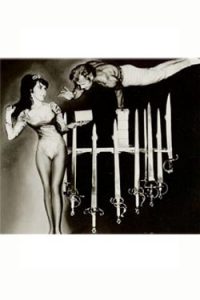
Montyne masterfully blended the thrill of danger with the art of performance, a combination that deeply resonated with the inherent dramatic essence of theatre. By executing his entire show above a perilous bed of razor-sharp swords without any safety mechanisms, Montyne not only heightened the suspense and intensity of his act but also embedded a visceral element that could be achieved in no other way. This daring setup, likened to a dramatic slash of red on one of his paintings, added a striking, unforgettable accent to his performances.
The pinnacle of his act, known as the "climb of death," remains unparalleled and unreplicated, underscoring the unique and extreme nature of Montyne’s theatrical performance. The fact that even his son has not attempted this feat speaks volumes about the act's complexity and the level of risk involved. Despite the grueling demands of performing this hazardous routine, sometimes up to five times a day, Montyne found the energy and inspiration to continue creating art in other forms, painting, and sculpting with the same fervor and intensity as his performances.
Much like his performances, his artwork was a manifestation of incredible control and precision, each piece a metaphorical defiance against the "thrust of a score of blades." Through his paintings and sculptures, Montyne explored and expressed human experiences, each challenging the constraints and adversities posed by nature. His art thus became an extension of his performances—both realms where he demonstrated his mastery over physical and creative elements, pushing boundaries and exploring the human condition in profound and exhilarating ways.
This distinctive approach, which Montyne branded as The Montyne Experience, helped change how figures and scenes were portrayed in modern art. His creations are celebrated for their artistic innovation and the way they encapsulate the essence of their subjects with unprecedented vibrancy and spirit. Through his work, Montyne left an indelible mark on the art world, redefining the possibilities of how form, space, and narrative can be explored through the canvas.
In the late 1940s and throughout the 1950s, Montyne entered a prolific phase of his career, a period marked by a rare freedom from everyday constraints that allowed his artistic spirit to flourish unrestrained. This era of his work is often seen as a time when his creative energies were at their peak, driven by a divine inspiration that seemed to flow through him, enabling the creation of art that was both passionate and profound.
During this period, Montyne's art was characterized by an explosion of creativity, resulting in an array of impressive works on canvas and in stone. His unique ability to infuse the spirit into reality is observed as he explored and celebrated the human form with an almost reverential zeal. Montyne viewed the human body as a divine creation, a "machine" that exemplified "the most fantastic work ever created." This perspective inspired the artistic approach but also fueled the desire to challenge societal norms and the often hypocritical views on nudity and the human form.
Montyne's challenge to common doctrine was akin to a revolutionary wielding a pencil in the Stone Age. He dared to confront and question the prevailing attitudes towards the human body, which many at the time considered sinful despite being a creation of the very divine force they worshipped. His work pushed the boundaries of artistic expression and societal acceptance, positioning him ahead of his time both in thought and technique.
As he navigated the complexities of creating art that featured the human body in its natural form, Montyne faced both criticism and acclaim. However, his commitment to portraying the inherent beauty and spirituality of the human form remained unwavering. This boldness in both his thematic choices and artistic expressions contributed significantly to his legacy, establishing him as a visionary Renaissance artist whose work transcended the norms of his time and continues to resonate with contemporary audiences.
Montyne masterfully blended the thrill of danger with the art of performance, a combination that deeply resonated with the inherent dramatic essence of theatre. By executing his entire show above a perilous bed of razor-sharp swords without any safety mechanisms, Montyne not only heightened the suspense and intensity of his act but also embedded a visceral element that could be achieved in no other way. This daring setup, likened to a dramatic slash of red on one of his paintings, added a striking, unforgettable accent to his performances.
The pinnacle of his act, known as the "climb of death," remains unparalleled and unreplicated, underscoring the unique and extreme nature of Montyne’s theatrical performance. The fact that even his son has not attempted this feat speaks volumes about the act's complexity and the level of risk involved. Despite the grueling demands of performing this hazardous routine, sometimes up to five times a day, Montyne found the energy and inspiration to continue creating art in other forms, painting, and sculpting with the same fervor and intensity as his performances.
Much like his performances, his artwork was a manifestation of incredible control and precision, each piece a metaphorical defiance against the "thrust of a score of blades." Through his paintings and sculptures, Montyne explored and expressed human experiences, each challenging the constraints and adversities posed by nature. His art thus became an extension of his performances—both realms where he demonstrated his mastery over physical and creative elements, pushing boundaries and exploring the human condition in profound and exhilarating ways.
The final chapter of Montyne's storied life was a tapestry of profound love & awe-inspiring miracles.
Montyne's art delves into realms that stir the imagination and evoke deep contemplation, exemplified by his captivating work "Indian Fantasy." His prowess extends to profound explorations of life and mortality, particularly in his masterful painting titled "The Reaper." This piece is emblematic of Montyne's ability to confront and challenge our perceptions of the afterlife. Named after one of the five incarnations of immortality, "The Reaper" not only questions the mysteries of what lies beyond death but also reflects on how we choose to live our lives. In this painting, Montyne masterfully creates an illusion that intertwines life and death, presenting a visual dialogue that engages viewers in a contemplative introspection about their own existence and eventual demise. This early work shows his talent for creating an illusion. The impact of viewing "The Reaper" is profound; it leaves observers mesmerized, showcasing Montyne’s exceptional ability to evoke both the ethereal and the existential within a single frame. The first piece to exhibit this ability to play with the audience’s conception is in the work titled “The Eyes of Christ.”
Painted on velvet from material his mother was using to make a dress, Montyne manipulates reflected light to create an illusion that changes depending on the viewer’s location. Thus, when observing this masterpiece, The Eyes of Christ magically change to appear that they open and close. These two works, “The Eyes of Christ and The Reaper,” are secretly protected and hidden for obvious reasons. They exemplify the artist’s life and contribution to the world. Both pieces manifest deep feelings about the good and the bad in the world. These parallel beliefs depend on each other to exist, providing an answer to human behavior. They truly are priceless to be displayed to a more informed and inspired audience in the future to come.
Montyne produced hundreds of works, many of which encapsulate his unique vision and thematic boldness. However, not all of these creations have had fortunate fates. Some of his paintings were stolen, their whereabouts unknown and possibly lost to the public forever, adding a layer of mystique and longing to his legacy. Meanwhile, those that remain accessible continue to captivate and enrich viewers, deserving to be displayed in galleries where they can be appreciated daily.
Montyne's art, thus, continues to influence and inspire, offering each viewer a chance to confront profound truths through the lens of his visionary interpretations, leaving a lasting impact on the world of art and beyond.
The final chapter of Montyne's storied life was a tapestry of profound love, awe-inspiring miracles, and the inevitable touch of pain that accompanies deep affection. In Portland, Oregon, an unexpected turn of events led Montyne to encounter and fall deeply in love with the woman who would become his wife, a moment that profoundly shifted the course of his life. This encounter was so serendipitous and the connection so immediate that it seemed to have been drawn from the very essence of fate itself. Until then, Montyne had lived a life marked by extraordinary achievements and adventures, embodying a spirit that seemed boundless. He had been married before, but Lora eloped with a movie producer while working in Los Angeles. His search for her was in vain. He moved on as words broke his heart again; she was found dead in an apartment in LA. Nevertheless, years passed before he was to find true love.
Painted on velvet from material his mother was using to make a dress, Montyne manipulates reflected light to create an illusion that changes depending on the viewer’s location. Thus, when observing this masterpiece, The Eyes of Christ magically change to appear that they open and close. These two works, “The Eyes of Christ and The Reaper,” are secretly protected and hidden for obvious reasons. They exemplify the artist’s life and contribution to the world. Both pieces manifest deep feelings about the good and the bad in the world. These parallel beliefs depend on each other to exist, providing an answer to human behavior. They truly are priceless to be displayed to a more informed and inspired audience in the future to come.
Montyne produced hundreds of works, many of which encapsulate his unique vision and thematic boldness. However, not all of these creations have had fortunate fates. Some of his paintings were stolen, their whereabouts unknown and possibly lost to the public forever, adding a layer of mystique and longing to his legacy. Meanwhile, those that remain accessible continue to captivate and enrich viewers, deserving to be displayed in galleries where they can be appreciated daily.
Montyne's art, thus, continues to influence and inspire, offering each viewer a chance to confront profound truths through the lens of his visionary interpretations, leaving a lasting impact on the world of art and beyond.
The final chapter of Montyne's storied life was a tapestry of profound love, awe-inspiring miracles, and the inevitable touch of pain that accompanies deep affection. In Portland, Oregon, an unexpected turn of events led Montyne to encounter and fall deeply in love with the woman who would become his wife, a moment that profoundly shifted the course of his life. This encounter was so serendipitous and the connection so immediate that it seemed to have been drawn from the very essence of fate itself. Until then, Montyne had lived a life marked by extraordinary achievements and adventures, embodying a spirit that seemed boundless. He had been married before, but Lora eloped with a movie producer while working in Los Angeles. His search for her was in vain. He moved on as words broke his heart again; she was found dead in an apartment in LA. Nevertheless, years passed before he was to find true love.
Montyne dedicated much of his remaining artistic energy to capturing China's likeness, spirit, and essence.

The portrait "Indian Fantasy" held a special place in Montyne’s heart, representing the ideal of feminine beauty and complexity. The startling resemblance between this envisioned figure and his future wife was a moment of destiny, compelling enough to transform the lifelong traveler and artist into a devoted husband and father. Adding his wife, China, to his hand-balancing act not only infused the show with a new dimension of beauty and elegance but also symbolized the blending of their lives into a shared journey of artistic and personal exploration. China's presence in Montyne's life and act brought a renewed vibrancy and depth, her essence enhancing the suspense and artistry of their performances together. More profoundly, she gave Montyne a grounding presence and the joy of a family, enriching his life in ways that transcended the stage and the canvas.
Montyne dedicated much of his remaining artistic energy to capturing China's likeness, spirit, and essence, culminating in the creation of "Gallatia," a work he regarded as his own "Mona Lisa." This piece, a mesmerizing blend of color, anatomy, and fantasy, is a testament to their love and her profound influence on his work. "Gallatia" embodies the hallmark qualities of a Montyne creation, weaving together the threads of love, art, and imagination into a legacy that transcends time. Through these intimate portrayals, Montyne not only immortalized his wife but also shared with the world a glimpse into the depths of his capacity for love and artistic expression
Montyne's relocation to a spacious residence in Portland, Oregon, marked a pivotal moment in his artistic journey. In the Grand Room at 3535 N.E. Sandy Boulevard, he established an Art Gallery. He began to devote himself more fully to his visual art pursuits. His engagement with the local art scene deepened, highlighted by his participation in lectures at the university, which further cemented his reputation as a classical artist in the region. This celebrity opened doors and enabled him to produce some impressive and historical events.
His creative ambitions culminated spectacularly in 1963 when Montyne designed and created what was then recognized as the world's largest parade float, christened "The Roman Fiesta." Four blocks long of art and actors, with The MGM Lion and a Bear, this innovative and magnificent concept was the highlight of the Portland Rose Parade, captivating an audience of over 330,000 spectators and reaching millions more through television broadcasts. The float's intricate design and grand scale not only showcased Montyne's artistic prowess but also resonated deeply with the public and parade judges alike, earning him top honors in Portland, never to be accomplished again in this way.
Buoyed by this success, Montyne didn't stop there; he entered "The Roman Fiesta" in the prestigious Pasadena Rose Parade. His entry once again stood out from the competition, securing first place. This achievement not only reinforced Montyne's status as a masterful creator of parade floats but also underscored his ability to connect with a broad audience through his art. The acclaim he received from both parades highlighted his unique blend of artistic vision and execution, making a significant mark in the public celebrations of the time. The float’s main statues were placed in front of his art gallery; they were huge and naked, causing an outcry of controversy and publicity. People banded together, picketing the statues with signs that were far more offensive than the glorious work they dismissed. Montyne romantically responded with intellectual prose, affirming his sincerity and humble triumph over those who viewed the work as graffiti. They remained there until he moved, as thousands of people each day passed by in segregated appreciation. The incident remains a reminder of the hypocrisy that manipulates our society. Montyne was awarded first place for his work in one arena and attacked in another when the art remained the same.
Montyne dedicated much of his remaining artistic energy to capturing China's likeness, spirit, and essence, culminating in the creation of "Gallatia," a work he regarded as his own "Mona Lisa." This piece, a mesmerizing blend of color, anatomy, and fantasy, is a testament to their love and her profound influence on his work. "Gallatia" embodies the hallmark qualities of a Montyne creation, weaving together the threads of love, art, and imagination into a legacy that transcends time. Through these intimate portrayals, Montyne not only immortalized his wife but also shared with the world a glimpse into the depths of his capacity for love and artistic expression
Montyne's relocation to a spacious residence in Portland, Oregon, marked a pivotal moment in his artistic journey. In the Grand Room at 3535 N.E. Sandy Boulevard, he established an Art Gallery. He began to devote himself more fully to his visual art pursuits. His engagement with the local art scene deepened, highlighted by his participation in lectures at the university, which further cemented his reputation as a classical artist in the region. This celebrity opened doors and enabled him to produce some impressive and historical events.
His creative ambitions culminated spectacularly in 1963 when Montyne designed and created what was then recognized as the world's largest parade float, christened "The Roman Fiesta." Four blocks long of art and actors, with The MGM Lion and a Bear, this innovative and magnificent concept was the highlight of the Portland Rose Parade, captivating an audience of over 330,000 spectators and reaching millions more through television broadcasts. The float's intricate design and grand scale not only showcased Montyne's artistic prowess but also resonated deeply with the public and parade judges alike, earning him top honors in Portland, never to be accomplished again in this way.
Buoyed by this success, Montyne didn't stop there; he entered "The Roman Fiesta" in the prestigious Pasadena Rose Parade. His entry once again stood out from the competition, securing first place. This achievement not only reinforced Montyne's status as a masterful creator of parade floats but also underscored his ability to connect with a broad audience through his art. The acclaim he received from both parades highlighted his unique blend of artistic vision and execution, making a significant mark in the public celebrations of the time. The float’s main statues were placed in front of his art gallery; they were huge and naked, causing an outcry of controversy and publicity. People banded together, picketing the statues with signs that were far more offensive than the glorious work they dismissed. Montyne romantically responded with intellectual prose, affirming his sincerity and humble triumph over those who viewed the work as graffiti. They remained there until he moved, as thousands of people each day passed by in segregated appreciation. The incident remains a reminder of the hypocrisy that manipulates our society. Montyne was awarded first place for his work in one arena and attacked in another when the art remained the same.
He was given the title of “Today's Michelangelo.”

Montyne's creation of "The Roman Fiesta" float not only captivated millions during its parade showcases but also, quite unexpectedly, planted the seed for a transformative chapter in his life. Among the millions enchanted by the float was Jay Sarno, an entrepreneur who was in the midst of conceptualizing a grandiose new project in the Nevada desert. Inspired by Montyne's artistic vision, Sarno decided to infuse a similar grand Roman theme into his new venture, Caesar's Palace in Las Vegas.
The impact of Montyne's float on Sarno was profound, leading to a fast friendship between the artist and the hotelier. This relationship prompted Montyne to move his family to Las Vegas in 1968, a decision that opened a new realm of opportunities. Sarno commissioned Montyne to create twelve heroic-sized statues for the front of another of his ambitious projects, the Circus Circus hotel. This commission was not just a significant professional engagement for Montyne; it also marked his deeper involvement in the burgeoning entertainment and casino industry of Las Vegas.
Beyond fulfilling his commission, Montyne and his wife also performed nightly under the permanent big top of Circus Circus, contributing to what would become one of the most successful ventures in the history of Las Vegas gaming. The visibility and acclaim of his work made Montyne a sought-after artist among the hotels in the city, enhancing his financial and personal stature considerably.
Montyne's integration into the Las Vegas scene was not merely a career move but a significant lifestyle change, deeply influencing both his professional trajectory and personal life. His contributions to the visual and performance arts in Las Vegas left a lasting legacy, affirming his status as a versatile and dynamic artist whose work transcended traditional mediums and settings.
Montyne was enlisted by the management of what was then the world's largest hotel after their initial artist failed to complete a critical series of murals. Facing a substantial challenge, Montyne was tasked with finishing what had become a stalled project. The first artist had been given twenty-four months to complete the murals but had managed to finish only two in twenty-one months. Demonstrating remarkable skill and dedication, Montyne stepped in and successfully completed all 36 heroic-sized murals in just three months, a testament to his extraordinary capabilities and work ethic. He was given the title of “Today's Michelangelo.”
This intense period of work, characterized by extreme stretches of wakefulness—sometimes remaining awake for five to six days at a stretch—culminated in Montyne collapsing from exhaustion for over fourteen hours. Despite this physical toll, his contributions significantly enhanced the hotel's visual appeal and cultural richness.
The impact of Montyne's float on Sarno was profound, leading to a fast friendship between the artist and the hotelier. This relationship prompted Montyne to move his family to Las Vegas in 1968, a decision that opened a new realm of opportunities. Sarno commissioned Montyne to create twelve heroic-sized statues for the front of another of his ambitious projects, the Circus Circus hotel. This commission was not just a significant professional engagement for Montyne; it also marked his deeper involvement in the burgeoning entertainment and casino industry of Las Vegas.
Beyond fulfilling his commission, Montyne and his wife also performed nightly under the permanent big top of Circus Circus, contributing to what would become one of the most successful ventures in the history of Las Vegas gaming. The visibility and acclaim of his work made Montyne a sought-after artist among the hotels in the city, enhancing his financial and personal stature considerably.
Montyne's integration into the Las Vegas scene was not merely a career move but a significant lifestyle change, deeply influencing both his professional trajectory and personal life. His contributions to the visual and performance arts in Las Vegas left a lasting legacy, affirming his status as a versatile and dynamic artist whose work transcended traditional mediums and settings.
Montyne was enlisted by the management of what was then the world's largest hotel after their initial artist failed to complete a critical series of murals. Facing a substantial challenge, Montyne was tasked with finishing what had become a stalled project. The first artist had been given twenty-four months to complete the murals but had managed to finish only two in twenty-one months. Demonstrating remarkable skill and dedication, Montyne stepped in and successfully completed all 36 heroic-sized murals in just three months, a testament to his extraordinary capabilities and work ethic. He was given the title of “Today's Michelangelo.”
This intense period of work, characterized by extreme stretches of wakefulness—sometimes remaining awake for five to six days at a stretch—culminated in Montyne collapsing from exhaustion for over fourteen hours. Despite this physical toll, his contributions significantly enhanced the hotel's visual appeal and cultural richness.
At the peak of his career, Montyne encountered
the grim realities of Las Vegas.

Following this monumental task, Montyne's expertise was again sought after by the MGM to bring a unique artistic ambiance to their "China" restaurant. He created a series of grand murals in a style reminiscent of both 10th and 16th-century Chinese art, employing traditional bamboo brushes to achieve authenticity and depth in his work. This project not only showcased Montyne's versatility as an artist but also his ability to adapt and respect historical and cultural artistry, further cementing his reputation as a master muralist. His work in these environments was not just decorative but served to elevate the aesthetic and atmospheric standards of the spaces they adorned, contributing to a richer, more engaging visitor experience.
At the peak of his career, Montyne encountered the grim realities of Las Vegas, a city that, while glamorous on the surface, harbored its own shadows. During this period, Montyne dedicated years to creating a series of murals entitled "Montyne’s Inferno," which vividly depicted visions of hell. These works were intended to provoke reflection and encourage viewers to choose a path of virtue over vice. The message resonated, and Montyne started to tour the exhibit across the United States to amplify its impact. It was a success, making an impression wherever it was displayed, as the passive financial rewards were better than anticipated.
However, while Montyne was performing in Japan with his wife, his artwork became the target of a sinister plot back in Las Vegas. A group of unscrupulous individuals hijacked the "Montyne’s Inferno" series and held it for ransom. This incident marked a dramatic and distressing chapter in Montyne's life, as the hijacked murals were not recovered until seven years later, by which time they had been irreparably damaged by the harsh desert elements.
Simultaneously, another misfortune struck when Jay Sarno’s prized statue, "Rape of the Sabine" by Montyne, was stolen. This sculpture was among Montyne's most esteemed works and was considered a masterpiece of his sculptural art. Rumors circulated that the statue remained hidden in a warehouse at Caesar’s Palace, suggesting that Sarno, unwilling to destroy such a significant piece, might have collected the insurance money while keeping the artwork intact.
These events underscored the complex interplay of art, commerce, and criminality in Las Vegas during Montyne's time. They also illustrate the vulnerability of the artists and their creations to the machinations of those who seek to exploit the cultural and financial value of art. Despite these challenges, the enduring legacy of Montyne’s work continues to be celebrated, highlighting his profound impact on the artistic landscape.
During this tumultuous period in Montyne's life, he faced significant adversity that tested not only his resilience but also his commitment to his art. The same unscrupulous figures, remnants of the Bugsy Siegel era of Las Vegas mobsters, who had previously targeted his artworks, now sought to extort him directly. In a dramatic confrontation, Montyne was taken out into the desert by these thugs, only to have the tables turned on them, leaving them stranded and driving back to Vegas alone in their limousine. This bold act, though a display of his indomitable spirit, unfortunately led to a backlash within the local community, making it difficult for him to secure further commissions from the hotels.
In response to these challenges, Montyne shifted his focus from large-scale commissions to creating paintings and sculptures for sale in galleries. This change of direction allowed him to continue working independently, free from the pressures and dangers associated with the hotel industry in Las Vegas. The works he produced during this time are considered priceless, embodying his ability to transcend adversity and continue creating meaningful art while under financial pressure.
Despite facing rejection and isolation during this phase, Montyne maintained his dignity and continued to pursue his artistic vision. His situation was emblematic of the broader struggles artists can face when navigating commercial pressures and unethical practices within their industries. The loss for the Las Vegas establishments was profound; they missed out on housing further historical pieces created by Montyne.
At the peak of his career, Montyne encountered the grim realities of Las Vegas, a city that, while glamorous on the surface, harbored its own shadows. During this period, Montyne dedicated years to creating a series of murals entitled "Montyne’s Inferno," which vividly depicted visions of hell. These works were intended to provoke reflection and encourage viewers to choose a path of virtue over vice. The message resonated, and Montyne started to tour the exhibit across the United States to amplify its impact. It was a success, making an impression wherever it was displayed, as the passive financial rewards were better than anticipated.
However, while Montyne was performing in Japan with his wife, his artwork became the target of a sinister plot back in Las Vegas. A group of unscrupulous individuals hijacked the "Montyne’s Inferno" series and held it for ransom. This incident marked a dramatic and distressing chapter in Montyne's life, as the hijacked murals were not recovered until seven years later, by which time they had been irreparably damaged by the harsh desert elements.
Simultaneously, another misfortune struck when Jay Sarno’s prized statue, "Rape of the Sabine" by Montyne, was stolen. This sculpture was among Montyne's most esteemed works and was considered a masterpiece of his sculptural art. Rumors circulated that the statue remained hidden in a warehouse at Caesar’s Palace, suggesting that Sarno, unwilling to destroy such a significant piece, might have collected the insurance money while keeping the artwork intact.
These events underscored the complex interplay of art, commerce, and criminality in Las Vegas during Montyne's time. They also illustrate the vulnerability of the artists and their creations to the machinations of those who seek to exploit the cultural and financial value of art. Despite these challenges, the enduring legacy of Montyne’s work continues to be celebrated, highlighting his profound impact on the artistic landscape.
During this tumultuous period in Montyne's life, he faced significant adversity that tested not only his resilience but also his commitment to his art. The same unscrupulous figures, remnants of the Bugsy Siegel era of Las Vegas mobsters, who had previously targeted his artworks, now sought to extort him directly. In a dramatic confrontation, Montyne was taken out into the desert by these thugs, only to have the tables turned on them, leaving them stranded and driving back to Vegas alone in their limousine. This bold act, though a display of his indomitable spirit, unfortunately led to a backlash within the local community, making it difficult for him to secure further commissions from the hotels.
In response to these challenges, Montyne shifted his focus from large-scale commissions to creating paintings and sculptures for sale in galleries. This change of direction allowed him to continue working independently, free from the pressures and dangers associated with the hotel industry in Las Vegas. The works he produced during this time are considered priceless, embodying his ability to transcend adversity and continue creating meaningful art while under financial pressure.
Despite facing rejection and isolation during this phase, Montyne maintained his dignity and continued to pursue his artistic vision. His situation was emblematic of the broader struggles artists can face when navigating commercial pressures and unethical practices within their industries. The loss for the Las Vegas establishments was profound; they missed out on housing further historical pieces created by Montyne.
The work at the MGM in Las Vegas remained
until a fire in 1980 tragically destroyed them.

One of the last significant contributions Montyne made before changing his focus was the murals at the MGM in Reno, Nevada. Huge and challenging, they graced their walls. The work at the MGM in Las Vegas remained until a fire in 1980 tragically destroyed them. This loss marked a symbolic end to a significant chapter of Montyne's career, where his public commissions were both celebrated and, at times, imperiled by the very environment that sought to elevate them. Montyne's story is a powerful reminder of the enduring spirit of an artist who, despite external pressures and challenges, continues to influence and inspire through his work.
Montyne's interaction with the University of Nevada, Las Vegas (UNLV) highlighted yet another chapter of challenges and conflict, underscoring the often complex relationship between artists and institutional prejudices. Commissioned to create a statue for the campus, Montyne envisioned a twenty-five-foot Rebel sculpture crafted from an innovative material he created called Poly-Marble. This material was formulated and used in creating the statues at Circus Circus. The UNLV statue was intended not just as a representation of the school's mascot but as a deeper reflection of the founding ethos of the university itself—embodying the spirit of rebellion and innovation.
However, the project encountered resistance from within the university's own art department. Members argued that such a significant work should be sourced internally, reflecting the talents and perspectives of the department's staff and students rather than an external artist. This internal dispute highlighted a tension between embracing external artistic contributions and fostering internal creative development.
Montyne's response to the controversy was firm; he chose not to compromise his artistic integrity amidst what he perceived as institutional vanity and immaturity, which trembled in the shadows of his credentials. As a result, the collaboration was aborted, and what could have been a monumental piece of art for UNLV remained unrealized. The only testament to Montyne's vision is the rendering he created over two days, a poignant reminder of what might have been—a major artistic contribution thwarted by jealousy and internal conflict.
This incident illustrates not only the potential conflicts that can arise in commissioning public art but also the broader themes of recognition and acceptance that often challenge artists working in complex institutional landscapes. Montyne's refusal to participate further with UNLV reflects his steadfast commitment to his artistic values and his unwillingness to be drawn into prolonged institutional controversies, kickbacks, and undeserving recognition. The university’s mindset would one day also destroy its successful basketball team.
Montyne's interaction with the University of Nevada, Las Vegas (UNLV) highlighted yet another chapter of challenges and conflict, underscoring the often complex relationship between artists and institutional prejudices. Commissioned to create a statue for the campus, Montyne envisioned a twenty-five-foot Rebel sculpture crafted from an innovative material he created called Poly-Marble. This material was formulated and used in creating the statues at Circus Circus. The UNLV statue was intended not just as a representation of the school's mascot but as a deeper reflection of the founding ethos of the university itself—embodying the spirit of rebellion and innovation.
However, the project encountered resistance from within the university's own art department. Members argued that such a significant work should be sourced internally, reflecting the talents and perspectives of the department's staff and students rather than an external artist. This internal dispute highlighted a tension between embracing external artistic contributions and fostering internal creative development.
Montyne's response to the controversy was firm; he chose not to compromise his artistic integrity amidst what he perceived as institutional vanity and immaturity, which trembled in the shadows of his credentials. As a result, the collaboration was aborted, and what could have been a monumental piece of art for UNLV remained unrealized. The only testament to Montyne's vision is the rendering he created over two days, a poignant reminder of what might have been—a major artistic contribution thwarted by jealousy and internal conflict.
This incident illustrates not only the potential conflicts that can arise in commissioning public art but also the broader themes of recognition and acceptance that often challenge artists working in complex institutional landscapes. Montyne's refusal to participate further with UNLV reflects his steadfast commitment to his artistic values and his unwillingness to be drawn into prolonged institutional controversies, kickbacks, and undeserving recognition. The university’s mindset would one day also destroy its successful basketball team.
Montyne’s work consistently showcased his deep
understanding of both color and form.

Montyne's artistic journey continued to evolve as he explored the integration of sculpture and painting, creating unique hybrid artworks that highlighted his mastery in both mediums. This phase of his career also saw him revisiting earlier projects, such as a series of greeting cards he had originally designed in the late 1950s. Initially perceived as controversial, these cards, known as the Montyne Violent Cards©, eventually found a niche in the changing cultural landscape, appreciated for their entertainment value in a more modern context. They achieved moderate success in hotel gift shops throughout Las Vegas and Reno, indicating a shift in public taste and acceptance over the decades.
Montyne's versatility as an artist was evident not only in his ability to work across different forms but also in his thematic explorations. From pen-and-ink drawings to sculpture, his work was showcased exclusively, with representation in prestigious venues like the Marcus Gallery, the Gross Galleries, the Jamari Gallery, and the Minator Galleries. His creative endeavors spanned various themes, including Western art and religious motifs. Despite this thematic diversity, Montyne consistently returned to his innovative sculpture-paintings, underscoring a deep commitment to his signature style.
This persistent dedication to blending sculptural elements with traditional painting techniques allowed Montyne to carve out a distinctive niche in the art world. His ability to continually innovate while maintaining a connection to his roots in sculpture-painting is a testament to his skill and creativity as an artist. Montyne's work, with its broad international reach and diverse thematic focus, exemplifies a career that not only spanned a wide spectrum of artistic expression but also adapted to and reflected his time's evolving tastes and cultural dynamics.
Montyne’s work consistently showcased his deep understanding of both color and form, traits that were vividly exemplified in pieces like “The Bull Fighter,” “The Mexican Bandit,” and his portraits of the human body. His ability to imbue life-like qualities into these sculptures, such as the smoldering cigarette in “The Mexican Bandit” or the tangible realism of the hand in “The Bull-Fighter,” demonstrates his mastery in blending the vivid dynamics of painting with the three-dimensional aspects of sculpture.
Montyne's art not only captures the physical essence of its subjects but also evokes a profound emotional response. His works are imbued with a palpable sense of strength and vitality, inviting viewers to reflect on the larger existential questions about life and the forces that shape our existence. This thematic depth encourages humility and an appreciation of life, challenging observers to consider the profound mysteries of our world.
Amidst these thematic and technical accomplishments, Montyne embarked on a particularly ambitious project: a statue featuring three rampant horses on an elaborate base. This endeavor, intermittently spanning over eight years, represents his ambition and commitment to a vision that would demand a significant portion of his life. However, this piece remains unfinished, symbolizing perhaps the ongoing nature of an artist's journey—always reaching, always aspiring to do more. This unfinished work, still significant and valued by many, underscores the personal sacrifices inherent in the life of a devoted artist. It remains a testament to Montyne's relentless pursuit of artistic perfection and the personal legacy he leaves behind.
Montyne's versatility as an artist was evident not only in his ability to work across different forms but also in his thematic explorations. From pen-and-ink drawings to sculpture, his work was showcased exclusively, with representation in prestigious venues like the Marcus Gallery, the Gross Galleries, the Jamari Gallery, and the Minator Galleries. His creative endeavors spanned various themes, including Western art and religious motifs. Despite this thematic diversity, Montyne consistently returned to his innovative sculpture-paintings, underscoring a deep commitment to his signature style.
This persistent dedication to blending sculptural elements with traditional painting techniques allowed Montyne to carve out a distinctive niche in the art world. His ability to continually innovate while maintaining a connection to his roots in sculpture-painting is a testament to his skill and creativity as an artist. Montyne's work, with its broad international reach and diverse thematic focus, exemplifies a career that not only spanned a wide spectrum of artistic expression but also adapted to and reflected his time's evolving tastes and cultural dynamics.
Montyne’s work consistently showcased his deep understanding of both color and form, traits that were vividly exemplified in pieces like “The Bull Fighter,” “The Mexican Bandit,” and his portraits of the human body. His ability to imbue life-like qualities into these sculptures, such as the smoldering cigarette in “The Mexican Bandit” or the tangible realism of the hand in “The Bull-Fighter,” demonstrates his mastery in blending the vivid dynamics of painting with the three-dimensional aspects of sculpture.
Montyne's art not only captures the physical essence of its subjects but also evokes a profound emotional response. His works are imbued with a palpable sense of strength and vitality, inviting viewers to reflect on the larger existential questions about life and the forces that shape our existence. This thematic depth encourages humility and an appreciation of life, challenging observers to consider the profound mysteries of our world.
Amidst these thematic and technical accomplishments, Montyne embarked on a particularly ambitious project: a statue featuring three rampant horses on an elaborate base. This endeavor, intermittently spanning over eight years, represents his ambition and commitment to a vision that would demand a significant portion of his life. However, this piece remains unfinished, symbolizing perhaps the ongoing nature of an artist's journey—always reaching, always aspiring to do more. This unfinished work, still significant and valued by many, underscores the personal sacrifices inherent in the life of a devoted artist. It remains a testament to Montyne's relentless pursuit of artistic perfection and the personal legacy he leaves behind.
Montyne's final years were marked by a poignant blend
of artistic triumph and personal tribulation.
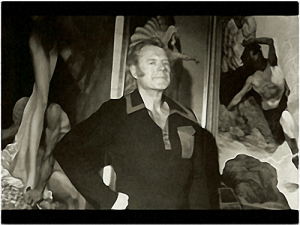
In 1981, a figure from his past re-emerged, offering him what would ultimately become his last professional commission. This project brought Montyne to Beverly Hills, California, where he dedicated fourteen months to creating a series of murals across a luxurious residence. The scope of these murals was vast and diverse, capturing historical scenes like Napoleon with his troops, a medieval feast, mythological figures such as Neptune, dramatic moments between gladiators, Moses, and even an ethereal oriental landscape. His work culminated dramatically in the master bedroom with a ceiling mural of Almighty God, a depiction that brilliantly balanced divine power with benevolence.
However, the conclusion of this extensive and varied project was marred by betrayal; the commissioner failed to pay Montyne in full. This breach of trust and respect deeply affected him, leading to a gradual withdrawal from his life’s work and, ultimately, his death.
Montyne passed away on March 17, 1989, in his son’s arms, leaving behind a legacy rich with artistic innovation and inspiration. Today, his work continues to resonate, lighting up the artistic landscape like stars in the night sky. The memory of Montyne endures not just in his artwork but also in the indelible story he left on the art world and beyond as a figure of immense creativity and resilience.
Montyne's impact on the artistic landscape was significant, especially in Las Vegas, where he played a crucial role in shaping the city's thematic aesthetics through his contributions to hotel and casino art. His philosophy on art, captured poignantly in a 1979 documentary by The Carson Broadcasting Company, emphasized the courage and labor intrinsic to artistic creation, a testament to his own approach to art.
“The work of art first starts in the mind. Whether it is in stone, on canvas, or an actor in a movie, to make a work of art tangible for others to see takes a lot of guts and hard work. If the audience doesn’t understand what you have created, then you don’t have a work of art.”
Montyne 1979
This short film biography records the memory of one of America’s great artists. His influence on the development of Las Vegas into a theme hotel resort destination and his early works in pin-up and romantic art are only a small example of what this popular artist created.
However, the conclusion of this extensive and varied project was marred by betrayal; the commissioner failed to pay Montyne in full. This breach of trust and respect deeply affected him, leading to a gradual withdrawal from his life’s work and, ultimately, his death.
Montyne passed away on March 17, 1989, in his son’s arms, leaving behind a legacy rich with artistic innovation and inspiration. Today, his work continues to resonate, lighting up the artistic landscape like stars in the night sky. The memory of Montyne endures not just in his artwork but also in the indelible story he left on the art world and beyond as a figure of immense creativity and resilience.
Montyne's impact on the artistic landscape was significant, especially in Las Vegas, where he played a crucial role in shaping the city's thematic aesthetics through his contributions to hotel and casino art. His philosophy on art, captured poignantly in a 1979 documentary by The Carson Broadcasting Company, emphasized the courage and labor intrinsic to artistic creation, a testament to his own approach to art.
“The work of art first starts in the mind. Whether it is in stone, on canvas, or an actor in a movie, to make a work of art tangible for others to see takes a lot of guts and hard work. If the audience doesn’t understand what you have created, then you don’t have a work of art.”
Montyne 1979
This short film biography records the memory of one of America’s great artists. His influence on the development of Las Vegas into a theme hotel resort destination and his early works in pin-up and romantic art are only a small example of what this popular artist created.